How We Make a Kids Sofa: 4 Production Steps
1. Fabric Is Prepared Before Anything Is Cut
Fabric problems are cheapest to catch before cutting. Once a defective or mismatched panel has been sewn into a cover, the correction costs time and material.
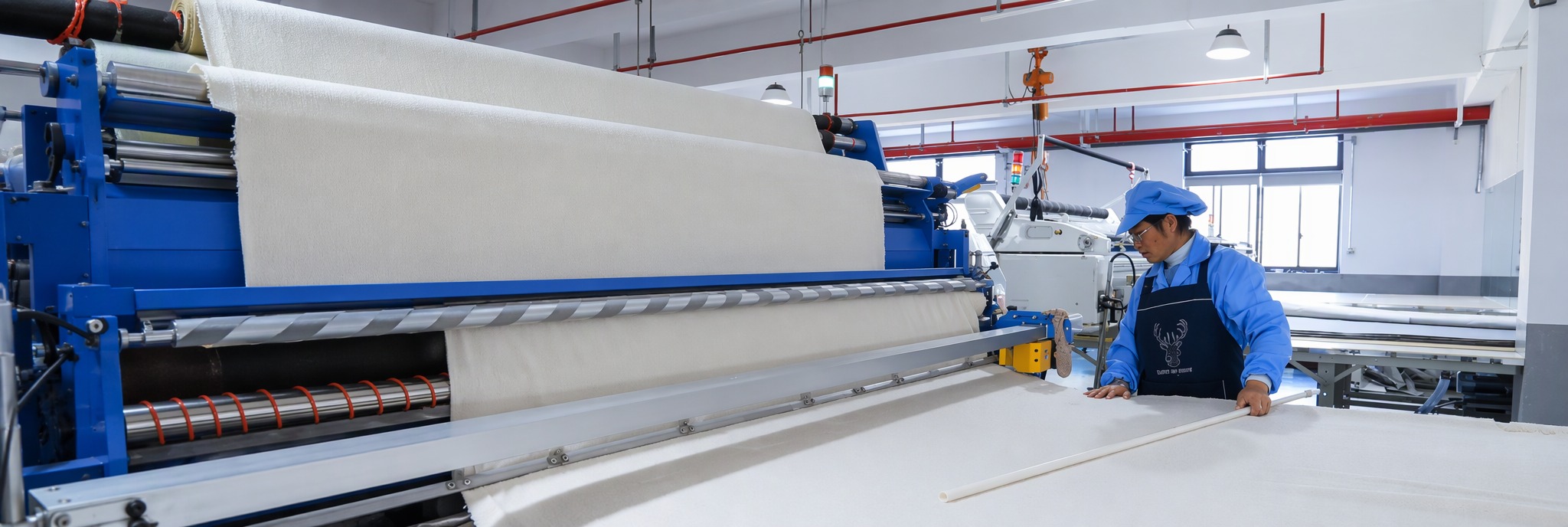
Before cutting, fabric is checked for visible defects, color variation, pile or nap direction and batch differences. Spreading the fabric flat, as shown in the photo, also lets the operator lay it in a consistent direction and avoid tension that could distort panel sizes.
This matters on a kids sofa because seat, backrest and armrest panels sit side by side. A small difference in pile direction can make one panel look lighter than the next, and a different dye lot can show when a retailer displays several sofas together. Different dye lots are kept separate rather than mixed and sorted afterwards.
Buyers should ask:
- Is fabric inspected before it reaches the cutting stage?
- How are different dye lots separated?
- Is nap or pile direction controlled across all panels of one sofa?
- Will the approved sample be made from the actual production fabric?
Fabric choice also affects cleaning, surface wear and compression behavior. Our  material technology page explains how foam and fabric options are selected for different children’s products.
2. Foam Is Specified Part by Part
Foam is one of the biggest cost and performance variables in a kids sofa, and it is rarely right to use one specification for the whole product.
The seat carries body weight and needs support and recovery. The backrest needs to hold its angle. Armrests are leaned on, climbed on and used as a step, so their edges need to keep their shape. Density, firmness, thickness and cutting direction all influence how each part behaves after months of daily use.
Production also depends on preparation. Foam needs to reach the right condition before cutting, batches should be consistent, and bonded parts need to be fully cured before compression. Otherwise the sofa can deform or recover unevenly after vacuum packing.
The useful question for a manufacturer is not only “What density do you use?” but “Why is this foam right for this part of the sofa?” For more detail, see our guide to choosing foam for soft products.
3. Patterns, Cutting and Sewing Make the Cover Fit
A kids sofa is three-dimensional. Its cover starts as flat panels. Pattern making is the step that connects the two.
Patterns cannot simply follow the surface area of the foam. They need to account for fabric stretch and thickness, seam allowance, zipper position, foam compression and the order in which the cover is fitted. When the fabric changes, the pattern may need to change as well.
Cover tension is where this becomes visible. A loose cover wrinkles and makes the sofa look tired before it is used. An overly tight cover is hard to fit, stresses the zipper and can pull the backrest or armrests out of shape. If the cover is designed to be removable for washing, it also has to go back on without changing the fit.
Seam allowance, stitch spacing, corner alignment, zipper ends and loose threads are checked during sewing, not only at the end. Recorded patterns are also what allow a brand to add new colors, a larger size or a matching piece to an existing kids sofa range without the new item looking out of place.
4. The Approved Sample Becomes a Production Standard
A good sample does not guarantee a good bulk order. The difference is whether the sample is turned into information the production team can follow.
After approval, foam dimensions, material specifications, cover panels, sewing sequence, zipper details, finished dimensions and packing instructions are recorded. Checks then happen during production: first-piece confirmation, self-checks at cutting, sewing and cover fitting, and observation of compressed products for swelling or recovery risk before shipment.
If foam, fabric, glue, accessories or packaging change later, the impact on performance is reviewed before production rather than discovered by the customer.
This is also what makes a smaller first order useful for testing the market. A trial order only gives reliable information if later orders can reproduce it. Our production process and quality and safety pages describe the inspection stages in more detail.
What This Means for Brand Buyers
A factory can produce what appears in a drawing. A development partner should also explain where the drawing may cause problems in production.
That could mean pointing out a seat height that does not suit the intended age group, recommending different foam for the seat and armrests, explaining why a fabric may show compression marks, or adjusting the pattern so a removable cover still fits after washing.
Tenderplay’s OEM and ODM services cover size, color, fabric, foam density, structure, logo and packaging, whether the starting point is a concept, a drawing or a physical sample.
When evaluating any kids sofa manufacturer, buyers can ask whether it can:
- explain foam choices for the seat, backrest and armrests;
- control fabric direction, dye lots and cover tension;
- make physical samples in the actual production materials;
- record specifications for repeat orders and new SKUs;
- review vacuum compression and recovery before shipment;
- support relevant material and testing documentation for the target market.
Before Your Next Kids Sofa Project
The materials in a kids sofa are familiar. The process that turns them into a consistent product is not.
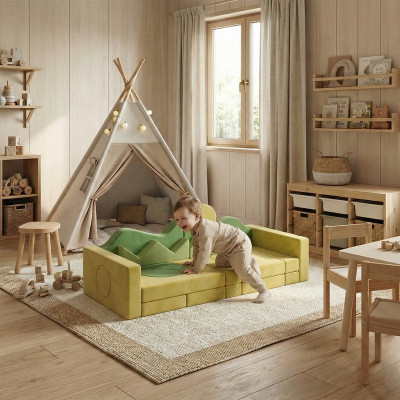
Fabric preparation, foam specification, pattern accuracy, cover fit and production records together decide whether a kids sofa keeps its shape, looks right next to the rest of the range and stays the same in the next order.
Tenderplay develops OEM and ODM kids sofas and other children’s soft products for brands, retailers and importers, including private-label products, custom sizes and themed designs.
If you are planning a new kids sofa, share your reference design, target market and key requirements, and discuss your project with our team before locking the first sample.