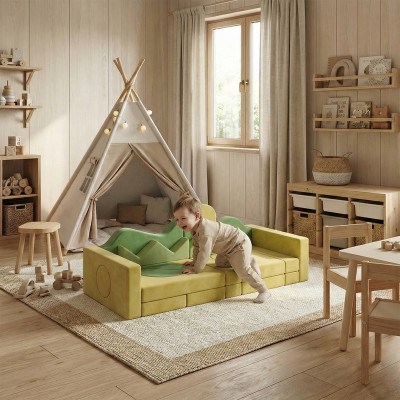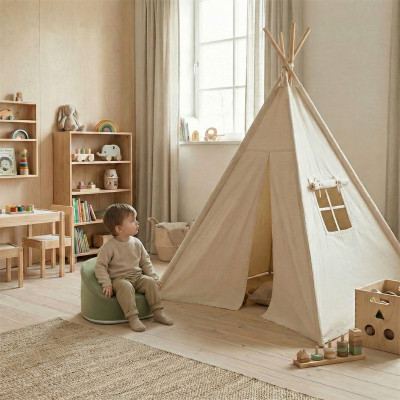
How to Choose a Modular Play Couch Manufacturer
1. Are You Comparing Price Before Locking the Foam?
Foam is one of the biggest cost and performance variables in a play couch.
Two modules can look almost identical when they are new but behave very differently after months of sitting, climbing and building. Lower-performing foam may gradually lose height, soften around the edges or recover unevenly.
This is why “high-density foam” is not enough information for a sourcing decision.
For a  custom modular play couch, the foam should be considered together with the function of each module. A base cushion, wedge, armrest and structural block do not necessarily need to behave in exactly the same way.
Buyers should ask:
- What foam specification is used for each module?
- Is that specification recorded for bulk production?
- Have the edges and corners been tested as well as the center?
- How does the module recover after compression packaging?
Edge performance is especially useful to check. The center of a cushion may still feel acceptable while the corners are already beginning to lose definition.
The better question is not simply, “What density foam do you use?”
It is:
“Why is this foam right for this particular module?”
A manufacturer should be able to explain the reason.
2. Will Future Modules Still Work With the First Collection?
This is easy to overlook when launching the first SKU.
A brand starts with one play couch. If it performs well, the next step may be an expansion pack, a larger configuration or a themed version.
That is where dimensional consistency becomes important.
If the second production run uses slightly different module dimensions, foam firmness or fabric specifications, the new pieces may no longer stack properly with the original product.
For example, a 17PCS modular play couch gives children many more ways to build than a simple starter set. But that only works if the pieces are designed as one system rather than as separate cushions.
Before placing the first order, ask:
- Are module dimensions recorded for future production?
- Are foam and fabric specifications archived?
- Can new pieces remain compatible with the original set?
- Can a themed version use the same basic modular system?
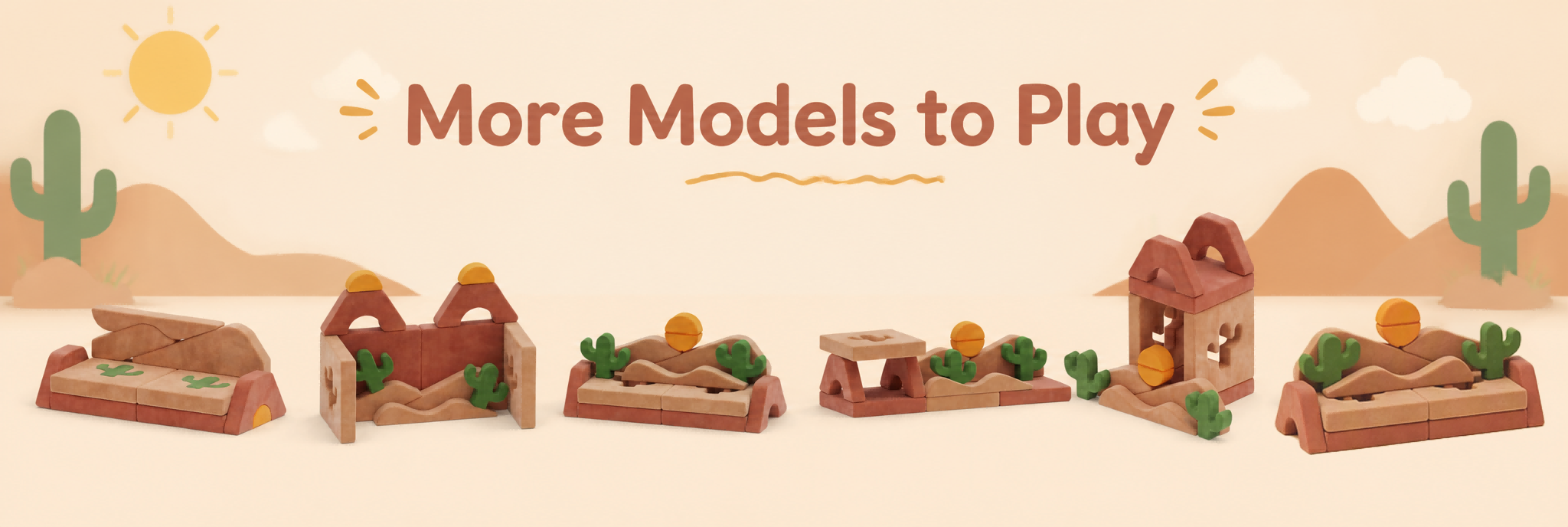
This also matters when developing products such as a themed modular play couch. A new visual concept should add something to the collection without turning into a completely disconnected SKU.
For brands planning a long-term Play Couch category, compatibility should be decided at the beginning, not after the first successful launch.
3. Are You Approving Color on the Actual Fabric?
4. Are You Using the First Order to Test the Market?
What Should a Good Play Couch Manufacturer Contribute?
The difference between a factory and a development partner usually appears before production begins.
A factory can manufacture what is shown in a drawing.
A development partner should also point out where the drawing may create problems.
That might mean questioning a module that will not stack securely, recommending a different foam structure, explaining why a fabric may show compression marks, or adjusting dimensions so future modules remain compatible.
Tenderplay’s Play Couch OEM and ODM development currently covers foam, fabrics, module configurations and dimensions, with product modification and full ODM development available depending on the project.
For buyers, a capable partner should be able to:
- give measurable foam specifications rather than general descriptions;
- keep production specifications for repeat orders;
- make physical fabric and color samples;
- check module compatibility;
- evaluate vacuum compression and recovery;
- support relevant material and testing documentation;
- explain when a design should be changed before sampling.
If you want a broader supplier-evaluation framework, our Play Couch manufacturer sourcing guide covers the questions brands should consider before selecting an OEM partner.
Before Your Next Play Couch Order
Most Play Couch sourcing problems start with the same assumption: that the product is simple because the materials are familiar.
The materials may be simple. The system is not.
Foam performance, dimensional tolerance, fabric consistency, compression recovery and future compatibility all affect whether a modular Play Couch continues to work as intended.
For buyers, better sourcing usually comes from asking better questions earlier.
Tenderplay develops OEM and ODM modular Play Couch collections for children’s brands, retailers and importers, including private-label products, custom configurations and themed designs.
If you are developing a new collection, discuss your Play Couch project with our team before locking the first sample.