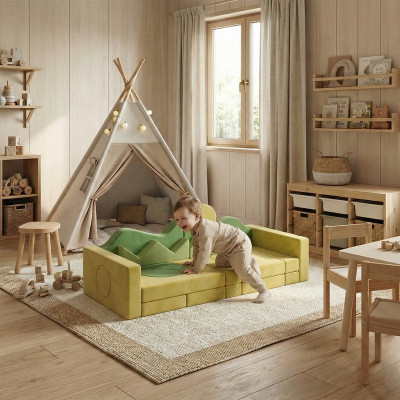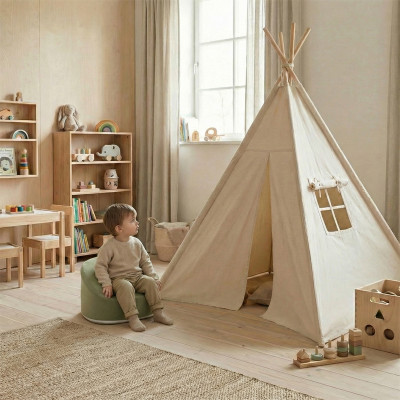
Kids Sofa Product Development: 6 Steps from Concept to Production
1. Define the Product Before Making the Sample
Good development starts with a complete product brief, not only a drawing.
Before engineering begins, the brand and manufacturer should clarify the intended use, target customer, sales channel, key dimensions, material direction, target price and packaging expectations. A product designed for family living rooms may require a different structure and cover solution from one designed for frequent use in an educational or soft-play setting.
The initial brief should help answer:
- Who will use the product and in what setting?
- Which functions are essential?
- Which visual details define the brand?
- What needs to be removable, washable, foldable or compressible?
- Which market and compliance requirements need to be reviewed?
This step prevents a common problem: developing an attractive product before its use, cost and production requirements are understood.
2. Turn the Design Into Engineering Information
An effect image explains what a product should look like. Engineering information explains how it can be made, inspected and repeated.
Depending on the project, the development team may need to translate the design into key dimensions, a foam cutting plan, fabric panels, seam positions, sewing sequence and a production instruction sheet. For shaped soft products, pattern making also needs to consider foam compression, fabric stretch, seam allowance, zipper position and the order in which the cover will be fitted.
This is where a manufacturer can add value before sampling. If a shape is difficult to cut, difficult to cover, unstable after compression or too wasteful in material, the issue should be discussed before the first sample is finalized.
A production-ready design should connect:
- the product’s appearance and structure;
- the material and construction method;
- the target use and expected handling;
- the packaging and transport method;
- the inspection points for bulk production.
3. Match Materials to the Product Function
Material selection should support the product’s intended performance, not only its appearance.
Foam may need to be considered by density, firmness, thickness, recovery, odor, curing and batch consistency. A seat, backrest, armrest or climbing element may not need exactly the same configuration.
Fabric selection also affects the finished product. Weight, width, nap direction, stretch, color consistency, abrasion, shrinkage, pilling and sewing behavior can influence the cover fit and the appearance of the final sample.
Materials should be reviewed together with the customer’s requirements and the target market. Supplier statements alone are not a substitute for appropriate material records, batch management and any required documentation or testing.
For Tenderplay, the material decision is connected to product use, cost, maintenance, packaging and repeat orders. This helps the brand avoid choosing a material that looks good in isolation but creates problems during sewing, compression or future production.
Suggested image: foam preparation, fabric inspection and production material samples. The image should show how material choices support product development, not simply display raw materials.
4. Use the Physical Sample to Find What the Drawing Cannot Show
A physical sample is not only for approving color and shape. It is the stage where the team can evaluate the parts of a soft product that drawings cannot fully communicate.
Depending on the product, the sample review may include:
- overall dimensions and proportions;
- foam firmness, support and recovery;
- cover fit and fabric tension;
- seam position, corners and zipper operation;
- stability during the intended use;
- removal, cleaning and reassembly of the cover;
- compression and recovery after packaging.
Not every sample has the same purpose. A concept sample, structure sample, testing sample and bulk approval sample should be identified clearly. Each revision should record the version, reason for change, responsible person and confirmation result. This reduces repeated changes based only on informal messages.
5.Kids Product Development: Convert the Approved Sample Into a Repeatable Standard
The most important transition happens after the sample is approved.
The approved product needs to be translated into production information that different teams can follow. This may include material specifications, foam cutting dimensions, fabric pattern pieces, seam and stitch requirements, zipper or fastening details, finished dimensions, packaging instructions and inspection points.
A sample can look correct while still being difficult to reproduce if the specifications remain in one person’s experience. The purpose of documentation is to make the product easier to manufacture, check and reorder.
Consistency also depends on change control. If foam, fabric, glue, accessories, suppliers or packaging are changed, the impact on product performance should be reviewed before the change enters production.
6. Control Quality Throughout Production
Final inspection is important, but it should not be the first time quality is checked.
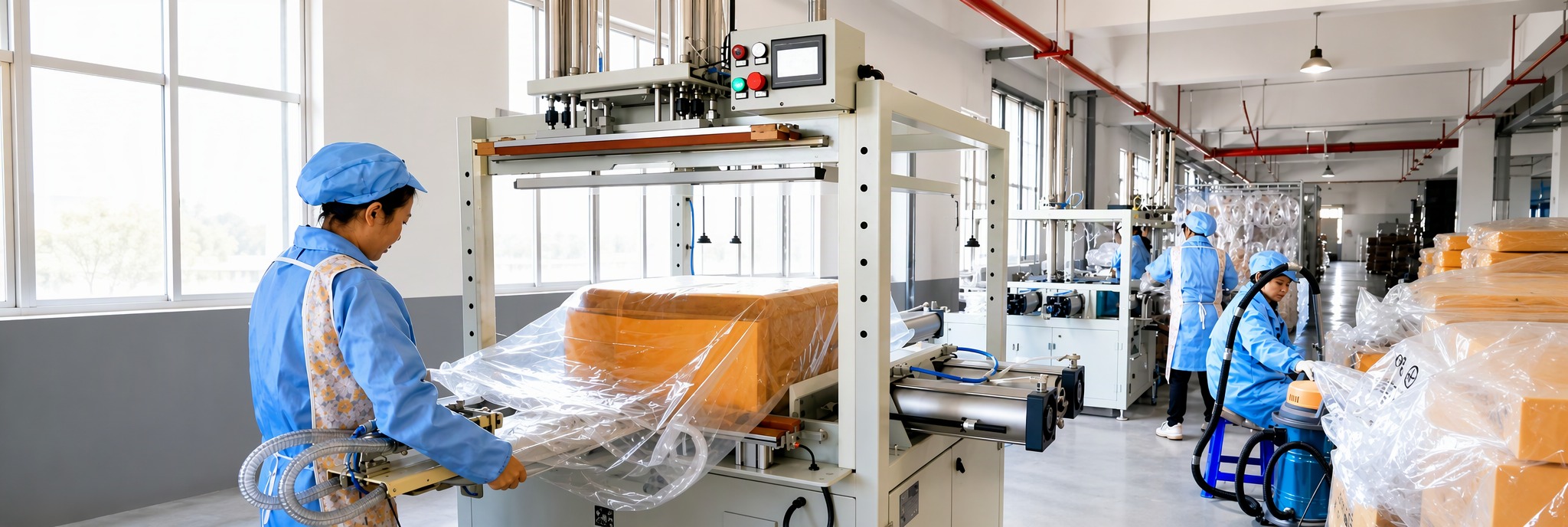
For children’s soft products, quality can be affected by foam cutting and bonding, fabric preparation, cutting direction, color batches, sewing, cover fitting, compression and packing. Process checks help identify problems before they move to the next operation.
Depending on the product, quality control can include:
- incoming material quantity, appearance, color and specification checks;
- first-piece confirmation before a batch continues;
- cut-piece identification and matched set control;
- seam, stitch, zipper, reinforcement and loose-thread checks;
- cover tension, shape and finished-dimension checks;
- inspection of packaging, labels and required functions;
- metal or needle detection where required by the product and market;
- observation of compression stability and recovery for compressed products.
The aim is not to add inspection for its own sake. It is to catch a problem while correction is still practical and to protect the consistency between the approved sample and the bulk order.
What Brands Should Expect From a Development Partner
A reliable children’s soft product manufacturer should do more than produce from a finished drawing. The partner should be able to discuss whether the design is workable, identify material and construction risks, develop a physical sample, record the approved standard and support repeatable production.
Tenderplay works with children’s brands, retailers and importers on soft product development across design translation, foam and fabric selection, pattern and construction planning, sampling, packaging considerations and production quality control. The exact scope depends on the product and project requirements.
Whether the project is a floor bed, play couch, ball pit, kids sofa or soft climbing product, the development process should connect the brand’s idea with the child’s use, the material system and the realities of production.
If you have a product idea, send us the reference image, target market, intended use and key requirements. Our team can help identify the information needed before the first sample is made.